
The Digital Driving Experience
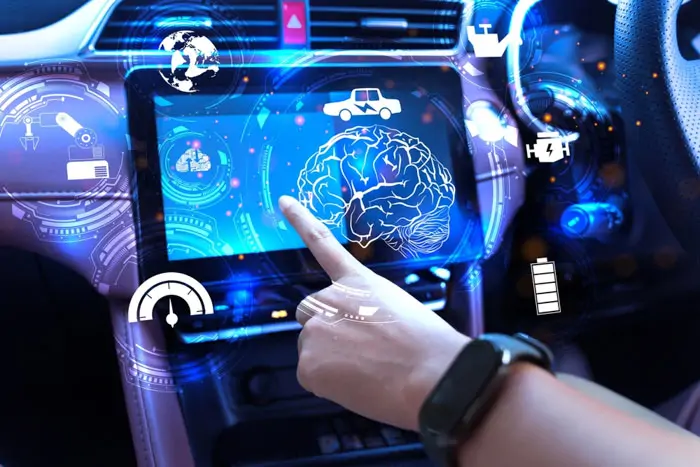
encompasses the integration of advanced digital technologies into the driving environment to enhance every aspect of the journey for both drivers. From smart infotainment systems and driver assistance features to connectivity options and personalized services, the digital driving experience represents a paradigm shift in automotive innovation. By leveraging artificial intelligence, augmented reality, internet connectivity, and sensor technology, automakers are transforming vehicles into intelligent, interconnected platforms that prioritize safety, convenience, and comfort. Whether it’s seamless integration with smartphones, voice-activated controls, predictive maintenance alerts, or immersive entertainment options, the digital driving experience redefines what it means to be behind the wheel in the modern age, offering unparalleled levels of convenience, entertainment, and safety for all occupants.
Technology that enables
electric mobility
Assisted Driving
Vehicle Management
communications
Full stack eAuto Software
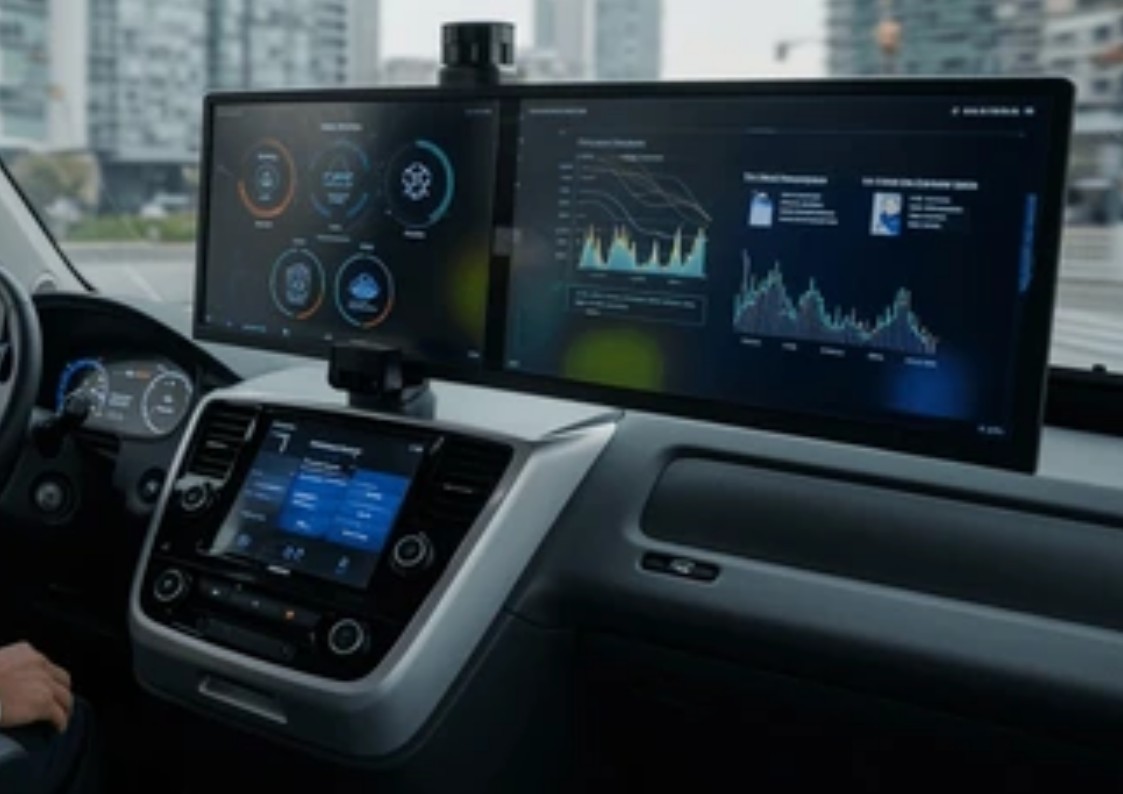
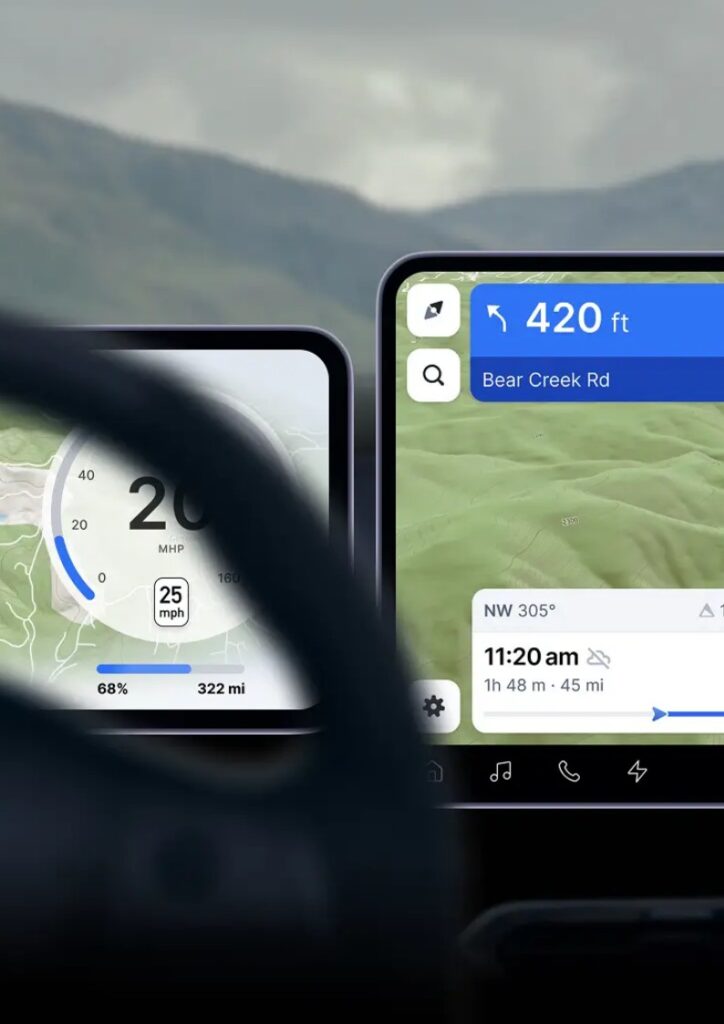
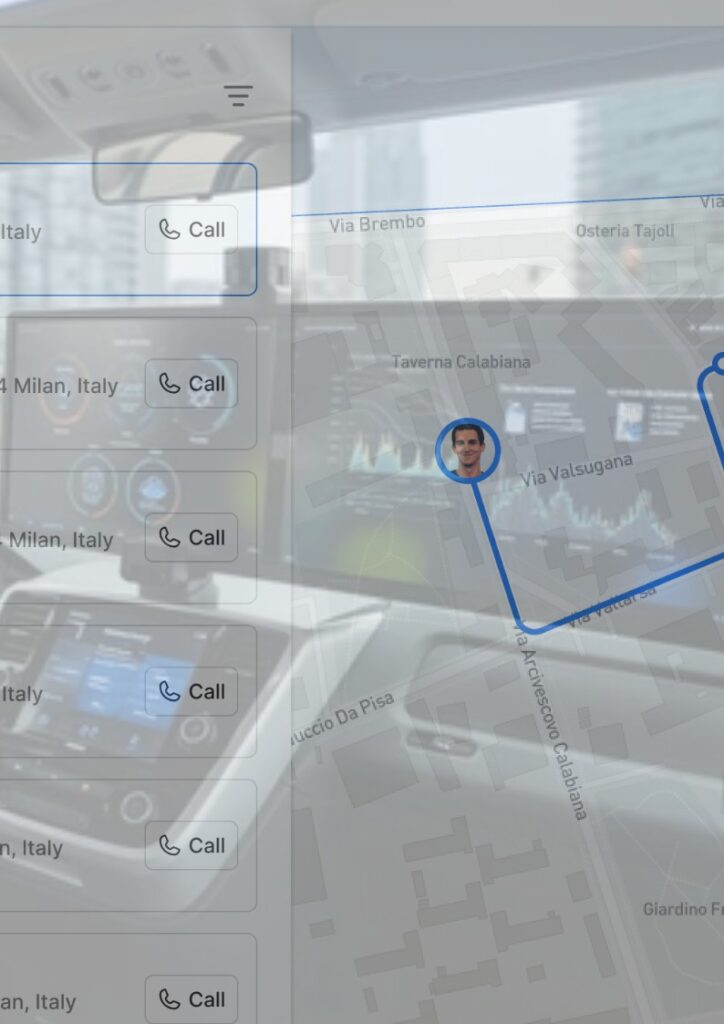
full-stack eAuto software platform that powers connected, electric, and autonomous vehicles through an integrated intelligence and connectivity stack.
Our technology stack unifies vehicle systems, IoT networks, cloud services, and AI engines into a single, scalable software architecture.
We enable software-defined vehicles and digital-first mobility ecosystems.
AUTOVISION
Assisted | Autonomous
AUTOPI
Vehicle Communication
AUTOPORT
New Energy Power Train
MOBILITY TECHNOLOGY
AUTOVISION
Assisted driving technologies represent a pivotal advancement in automotive safety and convenience, aiming to augment human driving capabilities and reduce the likelihood of accidents. These technologies leverage a combination of sensors, cameras, radar, and advanced algorithms to assist drivers in various aspects of the driving process, ensuring a holistic approach to navigation, security, safety, communications, and diagnosis.
Assisted Driving
Our Assisted Driving Technology leverages state-of-the-art sensor fusion, integrating data from various sensors such as cameras, radar, lidar, and ultrasonic sensors. This comprehensive approach ensures a robust and real-time understanding of the vehicle's surroundings.
Parking Assistance
These systems utilize sensors and cameras to assist drivers in parking manoeuvres, including parallel parking and perpendicular parking. They provide visual or audible cues to help drivers navigate tight spaces safely.
Traffic Assist
TSR uses cameras or image processing algorithms to detect and interpret traffic signs, including speed limits, stop signs, and no-entry signs. It displays relevant information to the driver, enhancing awareness and compliance with traffic regulations.
Cruise Control
Adaptive cruise control and lane-keeping functionalities. These features provide a seamless driving experience by automatically adjusting speed in response to traffic conditions and assisting in maintaining the vehicle within the designated lane.
A Decade in the Making. Built Ground-Up for Scalable Autonomy.
autovision™
AutoVision has been developed from the ground up over more than a decade of research, validation, and real-world learning. Designed as a modular, software-defined autonomous driving platform, AutoVision is powered by a scalable System-on-Chip (SoC) architecture that enables seamless progression from Level 1 to Level 4 autonomy—without re-engineering the vehicle platform.
AutoVision is not a retrofit solution. It is a native autonomy stack, architected for safety, performance, and mass deployment.
Modular SoC Architecture: The Core of AutoVision
AutoVision’s intelligence is built on a modular, upgradable SoC architecture, integrating:
High-performance AI compute (CPU, GPU, NPU)
Functional safety controllers (ASIL-D compliant)
Sensor fusion accelerators
Secure OTA and vehicle network interfaces
This architecture allows progressive autonomy rollout through software activation and compute scaling—future-proofing vehicles from day one.
AutoVision Autonomous Driving Rollout Roadmap
Level 1 – Intelligent Driver Assistance (ADAS Foundation)
“Enhanced Awareness, Assisted Control”
Capabilities
Adaptive Cruise Control (ACC)
Lane Keeping Assist (LKA)
Emergency Braking & Collision Warning
Driver monitoring and alerts
AutoVision Advantage
Real-time sensor fusion (camera + radar)
Edge AI decision-making on a single SoC
Data capture pipeline for continuous learning
Outcome: Safer driving, foundational autonomy data layer
Level 2 – Partial Autonomy
“Hands-on Autonomy, Eyes-on Road”
Capabilities
Simultaneous steering and speed control
Traffic Jam Assist
Highway pilot functions
Automated lane changes (driver supervised)
AutoVision Advantage
Redundant perception pipelines
High-confidence object classification
Fail-safe fallback logic embedded at SoC level
Outcome: Reduced driver workload, scalable ADAS adoption
Level 3 – Conditional Autonomy
“Eyes-off, Mind-on”
Capabilities
Autonomous driving in defined conditions (ODD-based)
System-initiated takeover requests
Automated emergency maneuvers
Advanced sensor fusion (camera + radar + LiDAR*)
(*LiDAR optional, architecture-ready)
AutoVision Advantage
Deterministic decision engines
Real-time safety arbitration
Secure OTA upgrades for autonomy expansion
Outcome: Human driver becomes a supervisor, not an operator
Level 4 – High Autonomy
“No Driver Intervention in Defined Zones”
Capabilities
Fully autonomous operation within geo-fenced areas
Autonomous urban and campus mobility
Robotaxi, logistics, and fleet applications
Remote monitoring and fleet orchestration
AutoVision Advantage
- Multi-SoC compute scaling
- Redundant perception and control domains
- Cloud-edge AI coordination for continuous optimization
Built for Progressive Deployment, Not Disruption
AutoVision enables OEMs and mobility operators to:
Launch L1/L2 today
Upgrade to L3/L4 via software and compute expansion
Preserve vehicle hardware investments
Reduce regulatory and certification friction
MOBILITY TECHNOLOGY
AUTOPi™
Autopia serves as a dynamic communication layer that connects vehicles to a network of IoT devices. This connectivity enables real-time data exchange between vehicles and the surrounding environment, fostering a responsive and adaptive driving experience.
Communication
The communication layer facilitates seamless vehicle-to-vehicle (V2V) and vehicle-to-infrastructure (V2I) communication. This connectivity improves traffic flow, enables cooperative driving, and enhances overall road safety.
Diagnosis
Autopia's diagnostic capabilities monitor vehicle health in real-time. Predictive maintenance alerts, coupled with AI-driven analysis, ensure that potential issues are addressed proactively, minimizing downtime and maximizing efficiency.
Navigation
Autopia revolutionizes navigation by leveraging AI algorithms to analyze traffic patterns, road conditions, and historical data. The system provides real-time, optimized routes, enhancing the overall efficiency of travel.
Cloud Ai
The incorporation of Cloud AI empowers Autopia with vast computational capabilities. This cloud-based intelligence processes and analyzes data from diverse sources, providing vehicles with the ability to make informed decisions based on real-time and historical insights.
Security
Through continuous monitoring and analysis, Autopi enhances vehicle security by identifying and responding to potential threats. Intrusion detection, anti-theft measures, and secure communication protocols contribute to a robust security framework.
A foundational intelligence layer for future mobility ecosystems
autopi™
Autopi™ is an AI-native vehicle connectivity platform that functions as a communication and data orchestration layer between vehicles, IoT devices, infrastructure, and cloud systems.
It enables secure, real-time, bidirectional data exchange to support connected vehicles, electric mobility, autonomous driving, and smart transportation systems.
Autopi™ converts distributed mobility data into structured, machine-readable intelligence for AI systems.
What Is Autopi™
A vehicle-to-IoT communication layer
A real-time mobility data platform
An AI-ready integration framework for V2X systems
Autopia is not a vehicle, not a hardware sensor, and not a consumer app.
It is a software-defined platform designed to integrate with OEM vehicles, EV systems, infrastructure, and smart city networks.
Autopi™ performs the following functions
Data Ingestion
Collects real-time data from vehicles, sensors, infrastructure, and edge devices.Data Normalization
Converts heterogeneous data into standardized, machine-readable formats.Contextual Intelligence
Adds environmental, spatial, and temporal context to mobility data.Real-Time Communication
Enables low-latency, bidirectional communication between vehicles and systems.AI Enablement
Provides structured inputs for machine learning and autonomous decision systems.
Communication Models
- Vehicle-to-Infrastructure (V2I)
- Vehicle-to-Device (V2D)
- Vehicle-to-Cloud (V2C)
- Vehicle-to-Fleet (V2F)
hybrid edge-cloud architecture
Edge Layer
Low-latency decision support
Local data filtering and prioritization
Real-time safety and control signals
Cloud Layer
Large-scale data aggregation
Predictive analytics
AI model training and optimization
Data Layer
Structured telemetry
Event-based signals
Geospatial and temporal tagging
MOBILITY TECHNOLOGY
AUTOPORT
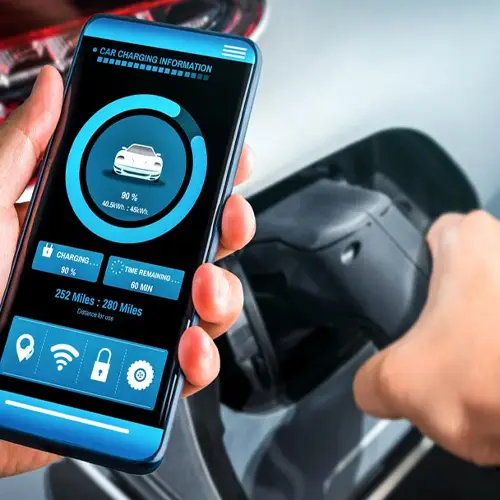
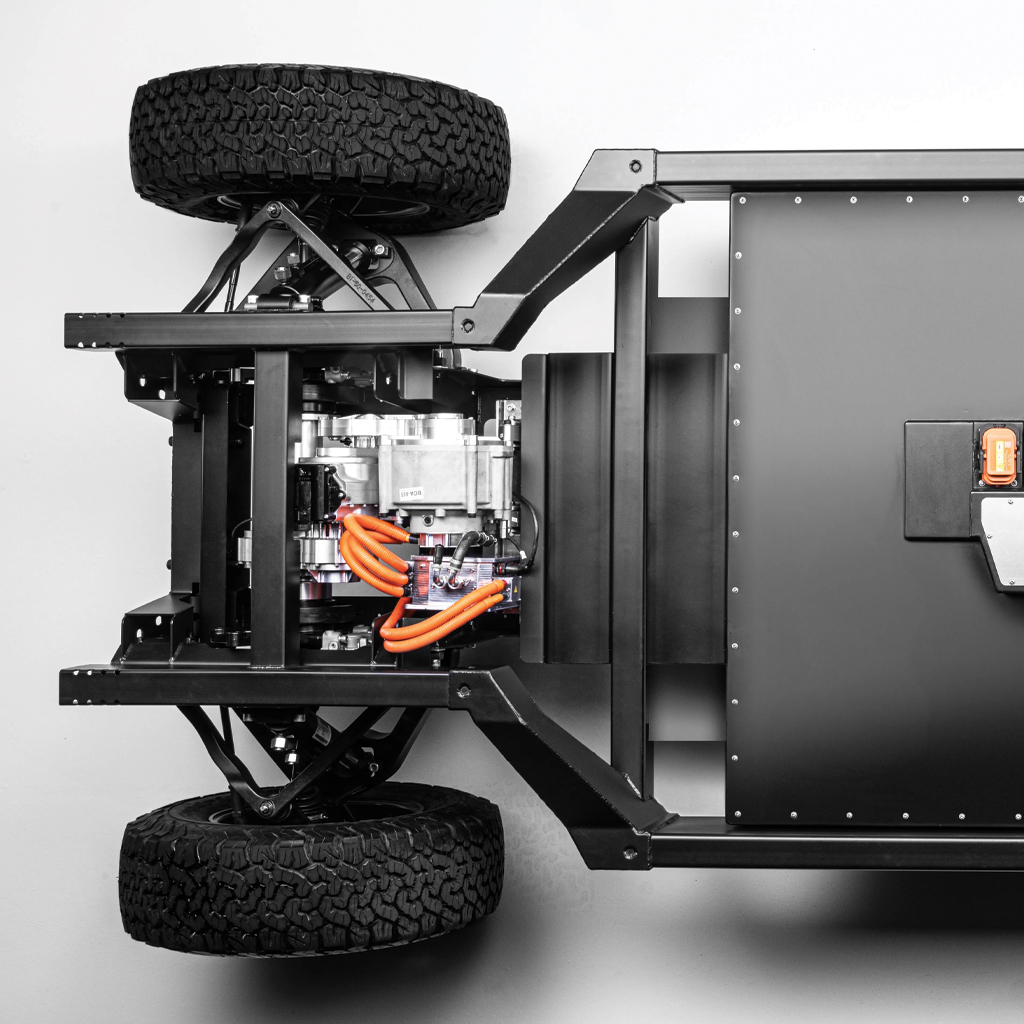
Autoport Power leads the charge in battery technology, specializing in energy storage and management systems tailored for Electric Vehicles (EVs). Our cutting-edge innovations optimize performance, extend range, and enhance sustainability, driving the evolution towards a greener and more efficient automotive landscape. By prioritizing reliability, efficiency, and eco-friendliness, we are revolutionizing the way EVs are powered, ensuring a smoother transition to electric mobility and a brighter, cleaner future for generations to come.
Technology Partnership
The partnership positions us as leaders in electrification technology, setting industry standards and inspiring others to embrace innovative solutions for a cleaner future.
Battery Technology
Together with Autoport Power, we are pushing the boundaries of battery technology. Our partnership focuses on developing cutting-edge battery solutions that enhance energy density, charging speed, and overall performance. These advancements contribute to extending the range of electric vehicles and making them more accessible for consumers.
Innovation Hub
The partnership establishes an innovation hub dedicated to research and development. This hub will serve as a centre of excellence where experts from both entities collaborate to push the boundaries of electrification technology, exploring new possibilities for the automotive industry.
Charging Infrastructure
The collaboration places a strong emphasis on creating a robust and efficient charging infrastructure. Autoport Power's expertise in energy management and distribution aligns seamlessly with our goal to establish a comprehensive network of charging stations, ensuring that electric vehicles remain a practical and convenient choice for drivers.